Cleaning for Eco-Friendly Option - CarInteriorMix
Cleaning for Eco-Friendly Option
Car interiors get messy fast: coffee spills, dusty dashboards, kid snacks ground into carpet, and that mystery sticky spot that seems to appear overnight. The usual ?quick fix? is to grab strong chemical cleaners and disposable wipes?but those can leave harsh fumes in a small cabin, create unnecessary waste, and sometimes even damage delicate interior materials.
The eco-friendly option doesn?t mean your car stays dirty. It just means cleaning smarter: using safer products, less water, fewer throwaways, and techniques that protect your upholstery, leather, plastics, and electronics. Here are practical, quick tips you can actually use on a weeknight or before a road trip.
-
Start with a dry clean to use less product and water
Vacuum and dust first, then wipe. When you remove crumbs, grit, and pet hair up front, you?ll need far less spray cleaner (and less scrubbing) to finish the job. Example: after a beach weekend, a fast vacuum of sand from seats and floor mats prevents you from smearing gritty sludge around with a wet towel. -
Keep a ?reusable kit? in the trunk instead of disposable wipes
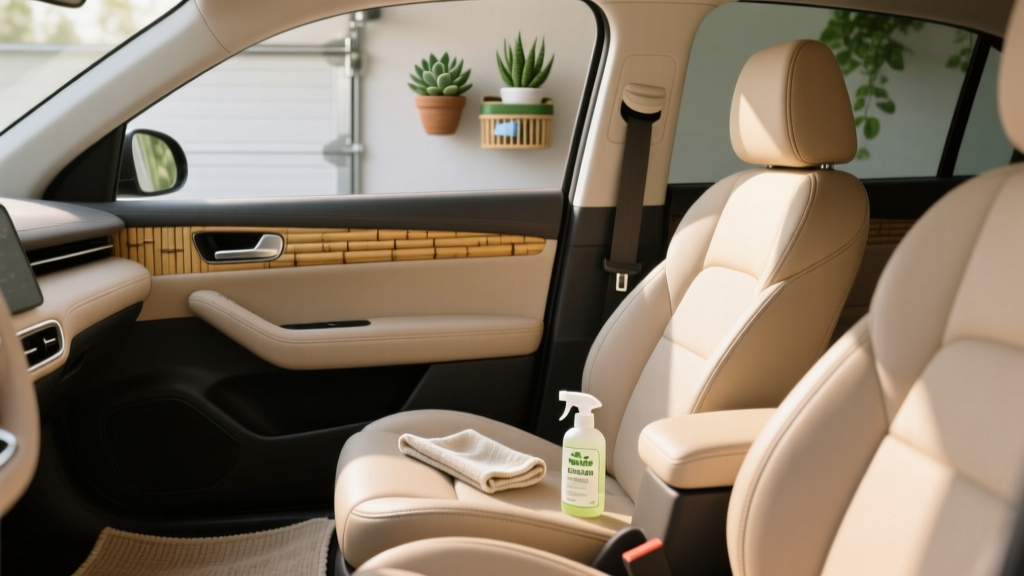
Swap single-use interior wipes for two microfiber towels (one dry, one damp), a small spray bottle, and a soft brush. Microfiber grabs dust and oils better than paper towels, and you can toss it in the wash instead of the trash. A real-world win: after a drive-thru coffee drip, a damp microfiber cleans the console without leaving lint everywhere. -
Mix a simple all-purpose interior spray (safe for most surfaces)
For eco-friendly car interior cleaning, a DIY mix works well for sealed plastics, vinyl, door panels, and rubber: 2 cups warm water + 1 teaspoon mild dish soap (like Dawn Free & Clear) in a spray bottle. Mist the towel?not the dashboard?then wipe and dry. Avoid soaking seams and switches; too much water can creep into buttons and cause electrical issues. -
Use diluted vinegar for glass and odor control?skip it on leather
For windows and interior glass, try a 1:1 mix of distilled water and white vinegar. It cuts haze and removes fingerprints without heavy chemicals; wipe with a clean microfiber and buff dry to prevent streaks. Safety note: don?t use vinegar on leather, natural stone trim, or certain sensitive coatings?stick to a dedicated pH-balanced leather cleaner if you?re not sure. -
Pick plant-based cleaners that actually work (and don?t stink up the cabin)
If you prefer store-bought, look for biodegradable, low-VOC options labeled for automotive interiors. Good examples include Meguiar?s Natural Shine Protectant (for interior plastics/vinyl) or a gentle, plant-based multi-surface cleaner like Method or Better Life (spot-test first). Scenario: if you?re cleaning before a long commute, low-odor products help you avoid that ?chemical cleaner? smell trapped in a closed car. -
Spot-clean fabric seats with foam, not a soaking wet shampoo
To keep water use low and prevent musty smells, use a foaming upholstery cleaner or make a light foam with a few drops of mild soap in a bowl of warm water. Dab (don?t flood) stains with a microfiber, then blot with a dry towel. Example: for a soda spill on cloth seats, quick blotting and light foam treatment prevents it from wicking deeper into the cushion. -
Deodorize naturally with baking soda?then vacuum it out
Instead of heavy air fresheners, sprinkle baking soda lightly on carpet and cloth seats, let it sit 15?30 minutes, then vacuum thoroughly. It absorbs odors from food, gym bags, and pet funk without masking them. Safety tip: keep baking soda away from vents and electronics, and don?t leave loose powder where it can get blown around while driving. -
Steam carefully for stubborn grime (great for crevices, but use low moisture)
A handheld steamer can be an eco-friendly deep-clean tool because it uses heat instead of chemicals?especially on cupholders, door pockets, and textured plastics. Use a small nozzle, keep it moving, and wipe immediately with microfiber so moisture doesn?t sit. Avoid direct steam on infotainment screens, gauge clusters, and any exposed electrical connectors. -
Protect surfaces to reduce future cleaning (and reduce product use)
A little protection goes a long way: apply a water-based UV protectant to dashboards and door panels to slow fading and make dust easier to wipe off later. Products like 303 Aerospace Protectant are popular because they?re effective and not overly greasy; apply to a towel and wipe evenly. Example: if your car bakes in the sun at work, UV protection keeps the interior looking newer and reduces how often you need heavy cleaners. -
Wash floor mats the low-impact way?shake, brush, then rinse lightly
Remove mats, shake them out over a trash bin, and use a stiff brush to break up debris before you reach for the hose. For rubber mats, a quick rinse plus a tiny amount of mild soap is usually enough; for carpet mats, spot-clean stains and avoid soaking the backing. Real-world tip: brushing first can cut your water use in half, especially after winter salt or muddy boots. -
Dispose of waste responsibly: empty bottles, dirty rinse water, and filters
Eco-friendly car cleaning also means thinking about what leaves your driveway. Recycle empty cleaner bottles when possible, wash microfiber towels instead of tossing them, and pour dirty rinse water down an indoor drain (not a storm drain) if it contains soap and grime. If you replace your cabin air filter (great for odors), bag the old one and trash it?don?t shake it out where dust can blow into the air.
Quick reference summary
- Vacuum first to reduce cleaner and water use.
- Skip disposable wipes; keep reusable microfiber towels in the car.
- DIY interior spray: warm water + a tiny amount of mild dish soap.
- Vinegar mix works for glass; avoid it on leather.
- Use foam/spot-cleaning for fabric seats to prevent musty smells.
- Baking soda deodorizes naturally?vacuum it up fully.
- Steam is powerful but keep moisture low and avoid electronics.
- UV protectant reduces future cleaning and product use.
- Brush mats before rinsing to save water.
- Recycle, wash towels, and dispose of dirty water responsibly.
Conclusion
Going eco-friendly with car interior cleaning is mostly about swapping habits: fewer throwaways, lighter products, and techniques that prevent mess from sticking in the first place. Try two or three tips on your next cleanup?like the reusable microfiber kit and the simple DIY interior spray?and you?ll keep your cabin fresher, safer to breathe in, and easier to maintain week after week.